
Shearing the Angora Goats - November 2025
It is mid-November and time to shear the Angora Goats. Angora goats are shorn twice a year. I shear them mid-May, so they go through the hot summer months without too much fleece on their body; and then shear them again in November. Angora goats have very locky fiber and the length of the locks will generally range from 3-4 inches when shorn. Unlike sheep, they do not have lanolin in their fiber, but there is some grease. An adult Angora goat will usually yield a mohair fleece that weighs ~ 5 pounds. This first fleece of a baby Angora goat, a kid, will yield a fleece that weighs from 1.5 to 2 pounds. (The kid mohair fleeces are exceptionally fine.)
I shear the Angora goats myself. It takes me ~30 minutes to shear a goat and the remainder of this blog will describe steps I follow in the shearing process. I shear most of the goat on a stand. The head is secured to the stand with a chain that wraps around the neck and I also take some twine to wrap around the horns and pull the head down, which helps keep the goat from moving around. Before starting to shear, I pick out any obvious dirt, debris and vegetable matter.
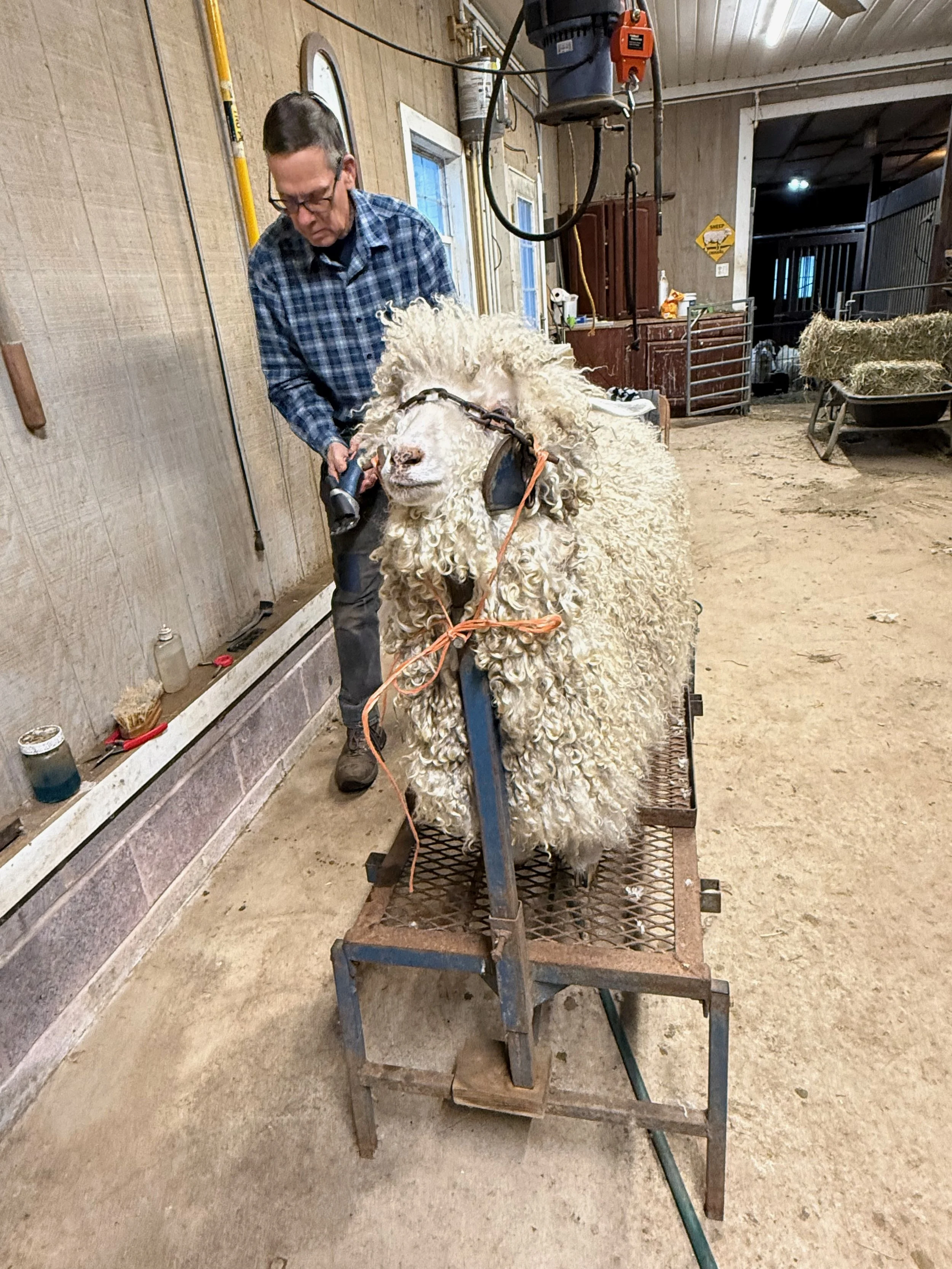
Ready to be shorn
Angora goats have loose skin and folds, making them prone to cuts if one does not shear appropriately and use the proper equipment. The two main components of the shearing systems are the comb and the cutter. The comb, which is the bottom plate of the shearing handpiece, has teeth that slide along the goat's skin; its main function is to gather and guide the fleece into the cutting area. The cutter has multiple teeth that move rapidly from side to side over the comb; the cutter's motion against the comb creates a scissor-like action, which effectively severs the mohair. (Think of a barber’s shears.) I use a comb with multiple small teeth, which helps to minimize any cuts or nicks.
I shear most of the goat on a stand and finish up with the goat on the floor. On the stand, I start by shearing the sides with long, smooth strokes. I then move to the front to do the chest. Then to the back side and lastly while on the stand finish up by doing the head. (If the goat’s horns are narrow, I sometimes use a scissors to cut the hair between the horns.)
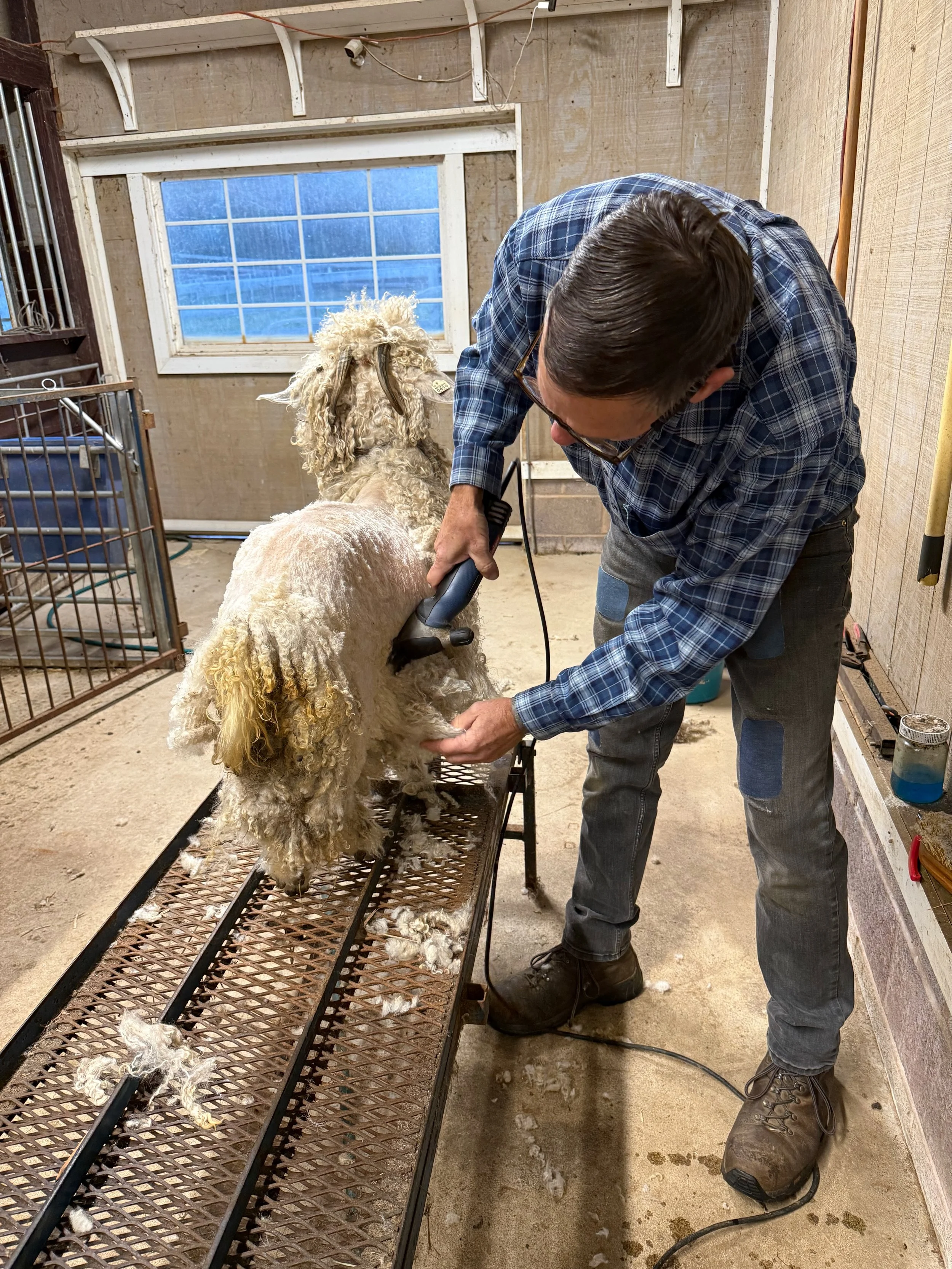
Shearing the side - while on the stand
After taking the goat down from the stand, I first shear the fiber around the neck. Then I lay the goat on the floor and first trim the hooves (which need to be done about every 3 months). I then finish shearing by doing the feet and belly. Periodically during the shearing process, you need to oil the blades to keep them running smooth and from getting too hot.
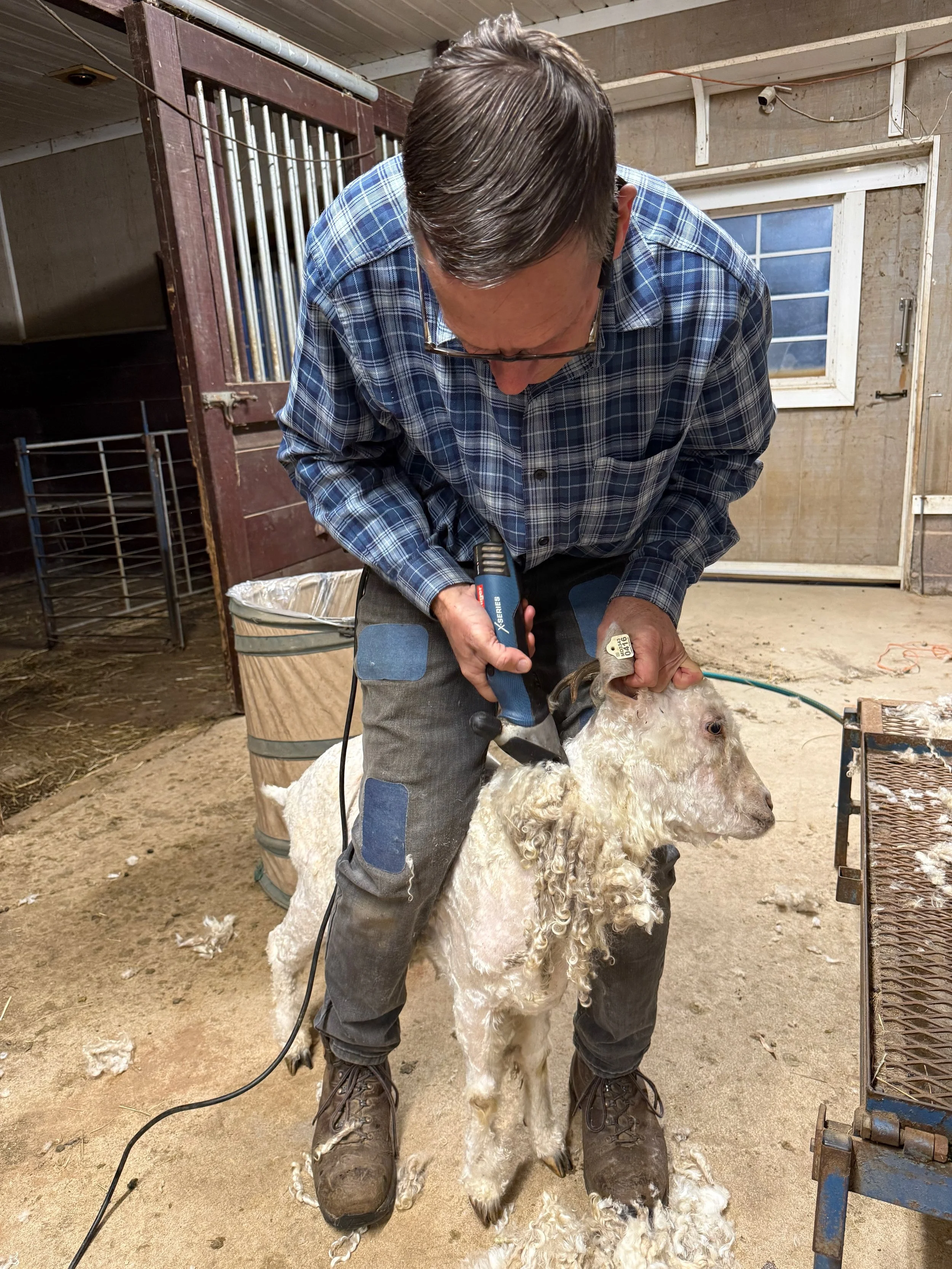
Shearing the neck
Once shorn, it takes 2-3 weeks for enough fiber to grow back on the Angora goat to provide adequate protection from the cold. So, in November with the colder nights, I turn the heat on in the barn for the goats. Some goats are more sensitive to the cold than others and will have the shivers. For those, I put a shirt on them to help keep them warm.
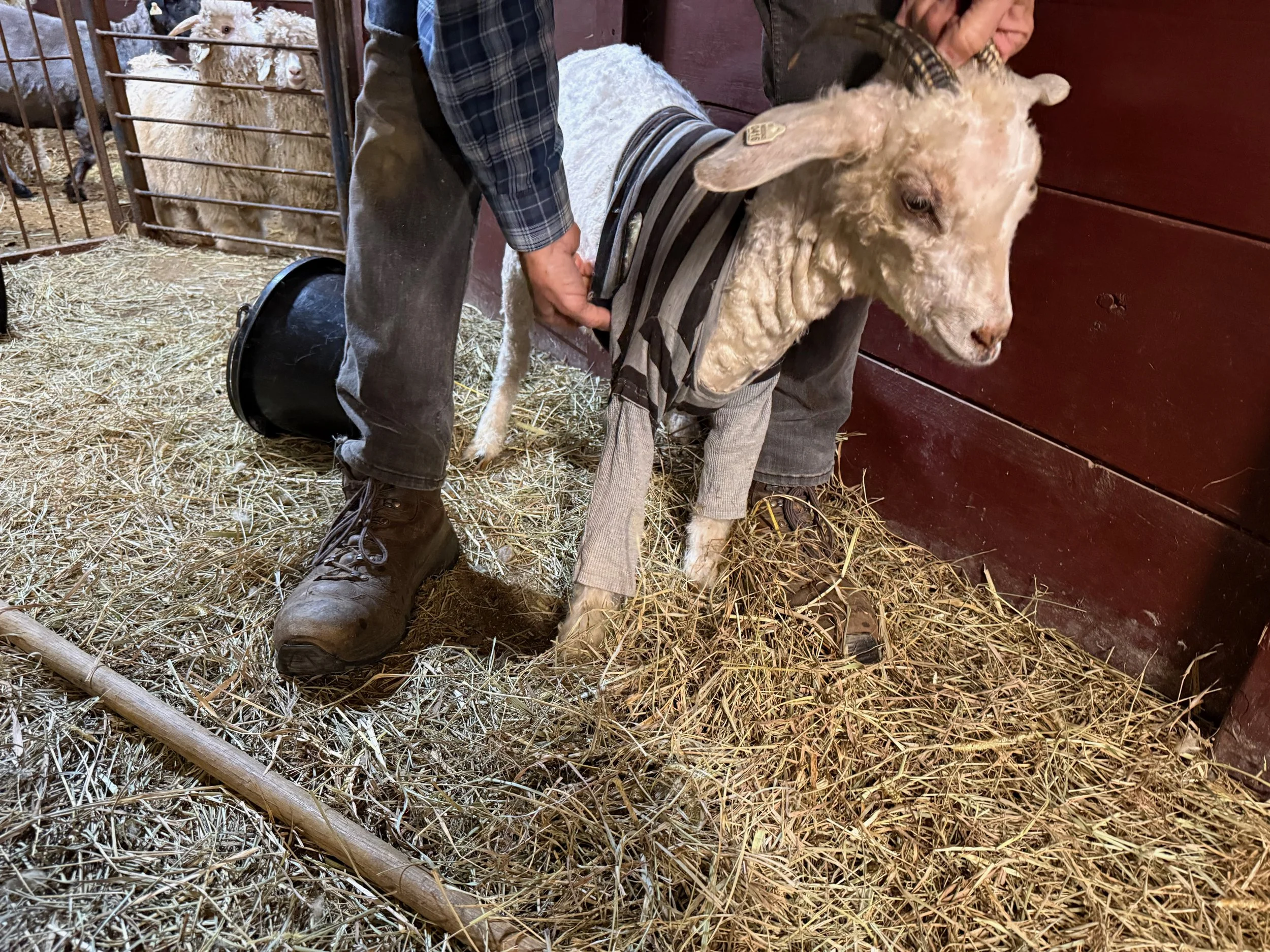
Getting a shirt to help stay warm
I usually only shear 2 goats a day (as my hand starts to get tired after 2). I have 19 goats so it takes about 9 days to get them all done. Most of the goats are cooperative. However, the kid goats, especially if it is the first shearing, fidget a lot. Once shorn, I also treat the goat with ivermectin to help control the lice they can sometimes get. (BTW, the lice that can infest a goat cannot affect a human.) The end result of this, of course, is a fleece that then needs to be processed to produce the lovely and lustrous mohair that ends up in the yarn and other products from Withers Wool and Farm.