
Farm and Animals
Ah, meteorological fall is here! We are getting some crisp mornings (couple mornings with frost) and cool, sunny fall afternoons with a sensory contrast of crisp air and golden warmth. The afternoons especially bring a unique clarity to the landscape, where the sharp chill of the breeze balances the comforting heat of the sun.
The big event concerning the animals was starting to breed a set of the Angora goats. On 14 October, I put one Angora buck in with four Angora does. Maybe too much info, but following is how the mating process unfolds:
When the Angora buck enters the breeding area, his normal calm and mellow demeanor transforms into a high-energy, obsessive, and often chaotic performance. This is marked by self-urination and olfactory testing. The buck urinates on his face, beard, legs and chest to coat himself in a musky scent to smell attractive to the does. (FTR, the Angora bucks smell much better than bucks from other goat breeds.) The buck then constantly
tracks the does, sniffs their urine, and curls his upper lip high into the air with his head tilted back to check if a doe is in peak heat. He also (it looks and sounds very comical) makes strange, rhythmic "blubbering" or low "wup, wup, wup" noises as he trots or paces alongside a doe, and he incessantly wags and flicks his tongue at the does while shadowing their every move around the pasture.
When a doe is in heat, she flags her tail rapidly. The buck trails right beside or behind her, kicking a front leg forward, pawing the ground, and nudging her with his shoulder. The ritual can last up to 20-36 hours of continuous shadowing, courting, and vocalizing before successful copulation.
I plan to keep the current buck in with the does until 5 November and then switch him out with another buck. The bucks are a little younger than I normally use (they are ~ 17 months old and I usually use a buck that is 24+ months old) so I am using two to help ensure better chances of success. Around 15 November I will stop the breeding process and put the does back all together and the bucks back all together. (And then I will start shearing them.)
The rest of the animals - Merino sheep, Blue Cochin chickens, and peafowl (ie the peacocks) - are all doing well and nothing really to report or comment on.
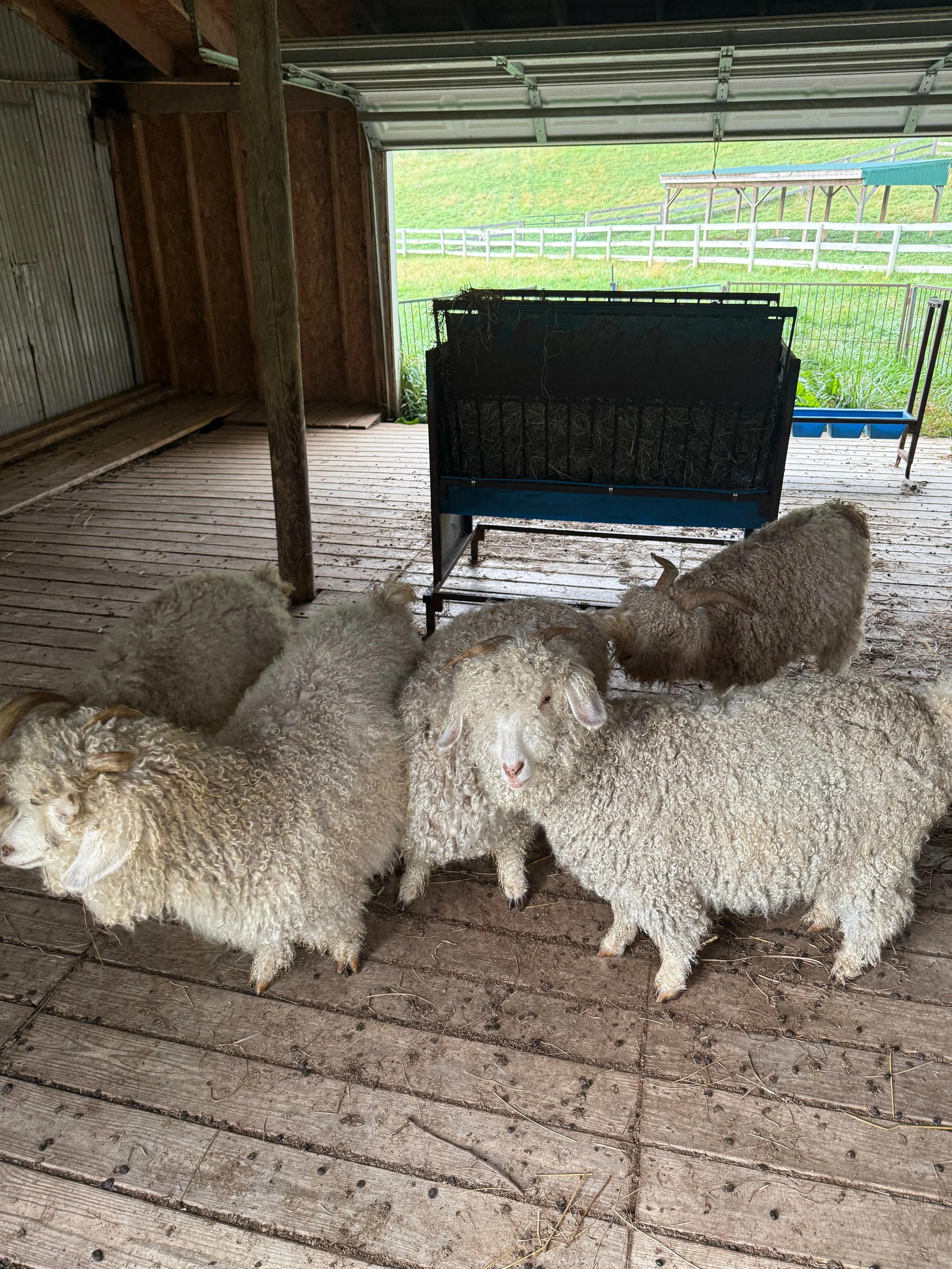
Angora buck sniffing at an Angora doe
Fiber and Shop
I received a shipment of products from one of the fiber mills I use - the Round Barn Fiber Mill (in Illinois): sock yarn, yoga mats, cat balls, and shoe insoles. The sock yarn is 3 ply and composed of 40% Merino wool, 40% mohair and 20% nylon. (The Merino wool and mohair of course is from the animals on the farm.) This yarn is white and I have already dyed a number of skeins in various colors. The yoga mats are ~ 67x 22 and composed of 50% wool and 50% mohair; these are eco friendly mats offering great cushioning, temperature regulation and anti-microbial protection. These were the main products of the fiber I had sent. With the fiber that could not be used with a run for these two products, I had them make some small catnip infused felted balls, for cats to play with, and a few felted insoles for shoes.
There were not as many hand-spun yarns made in October as in past months because of recovery from the Shenandoah Valley Fiber Festival (which took place 26-26 September) and preparation for the Fall Frederick Fiber Fest (which took place on 25 October), along with taking time to make some other products for the shop and festivals, along with the constant cleaning of fleeces. Even so, handspun yarns introduced into the shop included 4 singles (all of the same color and consistency), an elastic yarn, one of our unique “puffs” yarns and a beaded yarn. The other products I worked on were cat mats and dryer balls.
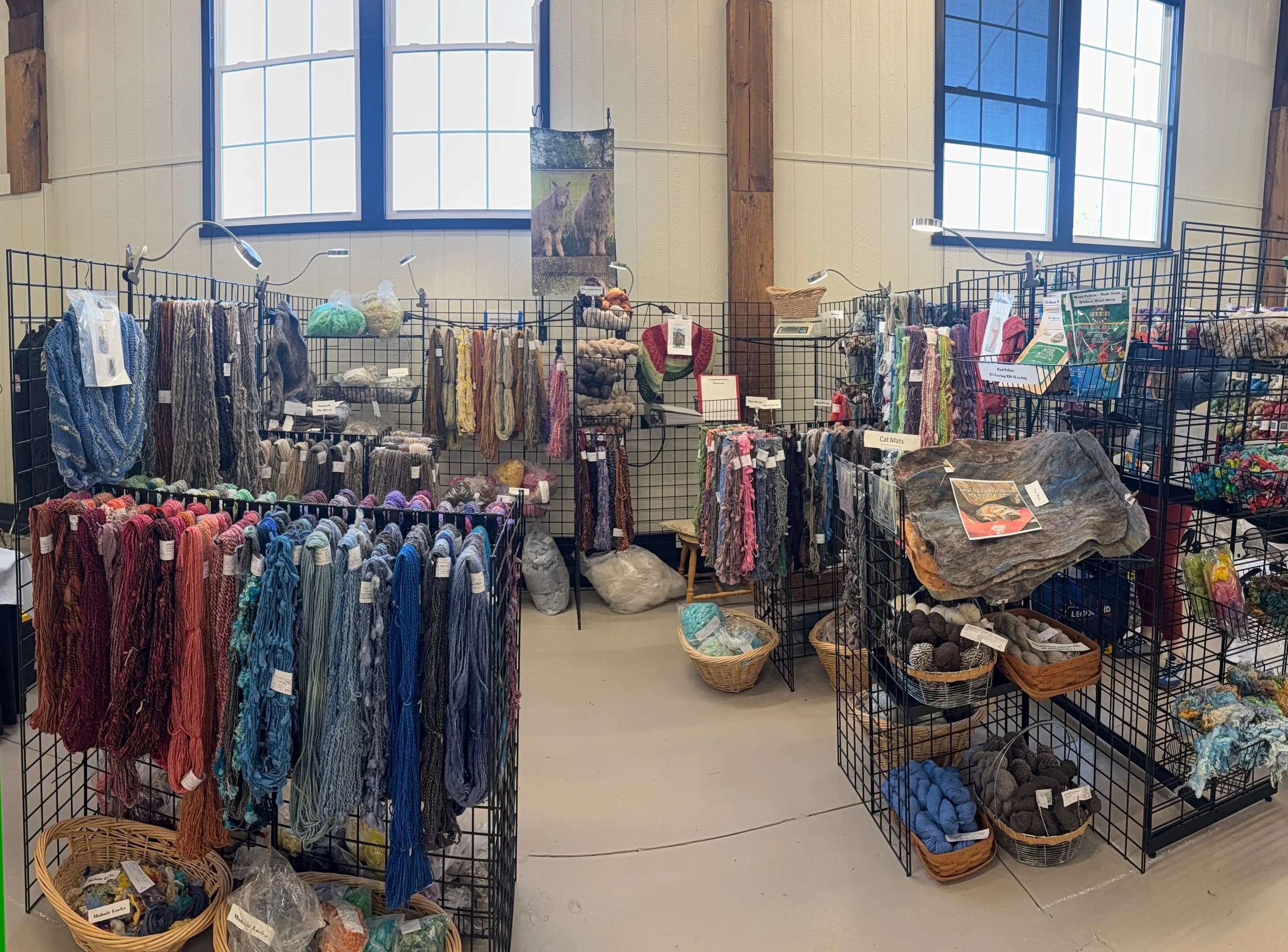
Panoramic picture of the setup at the Frederick Fiber Fest
Events
There were two classes in October at Withers Wool and Farm - Beginning Spinning and Beginning Crochet.
On 25 October I was a vendor at the Fall Frederick Fiber Fest at the Fredrick County fairgrounds. (Unlike most fiber shows that are open on a Saturday and a Sunday, the Frederick Fiber Fest is only open on a Saturday.) The day was gorgeous, lots of people came to the fiber fest and it was very successful; thanks to everyone who stopped by the booth. By Monday evening (26 October) I had set the shop back up with just a little tidying up left to do.
And now I am doing some preparation for the next (external) fiber show for Withers Wool and Farm: the Maryland Alpaca and Fleece Festival - which takes place on 14-15 November at the Howard County Fairgrounds. This is a nice festival with approximately 75 booths and includes a number of alpacas in various pens. On Saturday and Sunday about noon the Alpacas, in costumes, are paraded around the festival area. Withers Wool and Farm will be closed on Friday 13 November to set up at the festival and on 14 November while at the festival. Parking and admittance to the festival are free.
Finally, in cooperation with Avalon Springs Farm, Withers Wool and Farm will have some holiday activities starting on the Friday after Thanksgiving. More on this to come.
#######################################################
Lots of social media posts about all of this.
Instagram: withers.wool; Facebook: Withers Wool and Farm