
December 2025 Happenings at Withers Wool and Farm
Farm and Animals
The previous blog discussed at length the challenges of coping with the winter weather on the farm. And we have had it all this December: brutally cold days, snow days, windy days all mixed in with some relatively pleasant days (at least pleasant from a winter perspective). The snow is really not that much of a challenge: the sheep and goats stay off the pasture inside a barn or under shelter and the chickens and peacocks have a large covered area in their respective aviaries to stay under. When brutally cold, the Angora goats go out late and come back in early to the heated (white) barn. The sheep, chickens and peacocks simply come into their sheltered areas late afternoon before it gets dark and everyone gets heated water and extra grain/feed for energy. (I also put out extra bird seed for the wild birds). Everyone is doing well and since I have taken all the necessary precautions, there have been no issues with the cold, snow, and blustery weather. And it is interesting how the body adapts; now when the temperature gets to the 40s and it is sunny (and not windy), it seems positively balmy.
When we did get the snowfall earlier in December (4 inches at the farm), like everyone else, I had to do some shoveling on my driveway (just the top), and shovel off the stairs and a few selected pathways. The animals staid in their shelters/barn for 4 days until enough snow had melted to let them out again.
For the Merino Sheep and Angora goats, I throw down waste hay on the floor of their shelter/barn to help provide insulation when it is especially cold. And instead of cleaning up their areas daily, I simply through down more waste hay. When the cold (and/or snow) passes, I then have to take extra time to remove the waste hay (and their poop) that has accumulated, so it does not build up too deep. (I just think of it as good exercise.)
Snow is actually good for the soil - as when it melts there is deep, even hydration. And the cold can kill off a lot of the parasites in the soil. So there are certainly some advantages to the winter weather. (Besides snowy scenes providing great pictures.)
The three bucks born earlier this year (in late May/early June) were removed from their moms and the herd of does. At approximately six months they are not supposed to be sexually mature enough to breed - but we once had a doe get unexpectedly pregnant and we thought it had happened from a buck who was 7 months old. (The Angora does are in their estrus ~ approximately September thru February.) So taking no chances, I removed the three young bucks and they go up at night in a separate area at the top of the barn and outside in a separate field during the day.
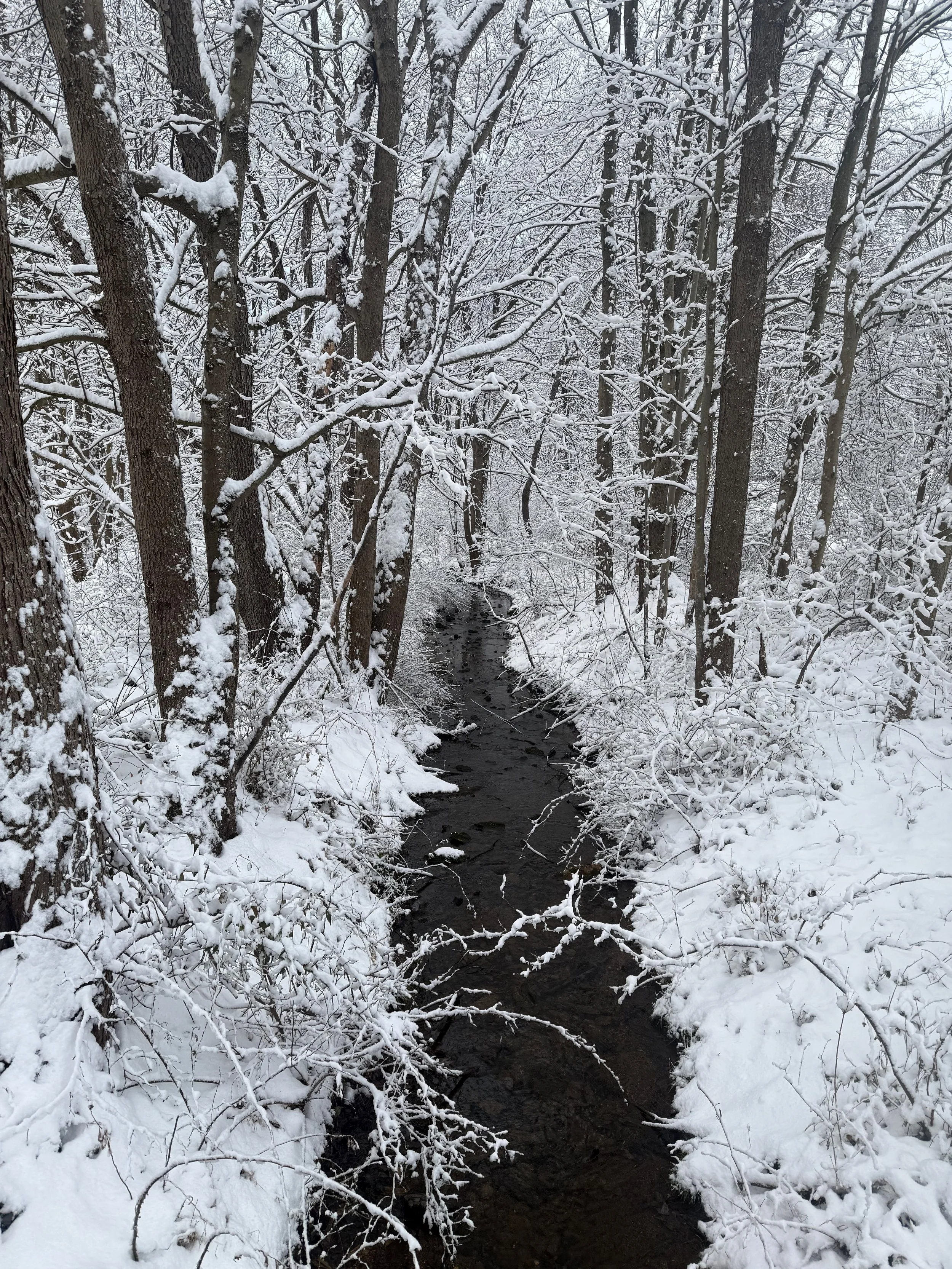
Stream and forest after a snowfall
Fiber and Shop
I have been doing a lot of dying in December - primarily on the sock yarns. The socks yarns are composed of 40% Merino, 40% mohair and 20% nylon - and are a 3 ply fingering gauge at 350+ yards. The undyed sock yarns are white, cream, and grey. I have dyed using the following colors: Steel Blue, Teal, Persimmon and Maroon.
I follow a normal dying process of first soaking the skein of yarn (for at least 3 hours), adding the dye (I use 1/2 tsp of dye) to a pot of warm water, adding the skein to the warm water that has the dye, heating the water in the pot to ~200 degrees, then adding 1/4 cup of vinegar to the water, and let the yarn sit in the pot, keeping the temperature at ~ 200 degrees, for about an hour. Stir, gently, after the dye has been added, after the skein has been added, and after the vinegar has been added. Usually after an hour all the dye has been fully absorbed into the skein of yarn. Sometimes a little more time is needed and also adding a little more vinegar can be useful to help the dye absorb.
All dye jobs have been very straightforward and the yarns look great. The white and cream yarns dyed come out with the color of the dye - with slight variations between the white and cream. Dying the grey yarns results in a darker, cooler-toned hue - as compared to using the same dye on a white or cream yarn.
I have also been making a number of batts using the smaller drum carder. These include several wool mohair blends as well as some pure kid mohair blends. Batts are great for felting as well as spinning. Carding a batt allows large variations of colors to be blended together (more color variations than is possible than in the roving made in the mill) and then can yield very interesting looking hand spun yarns. And speaking of spinning, a number of 2-ply, cable and single ply yarns have been hand spun and added to the shop in December.
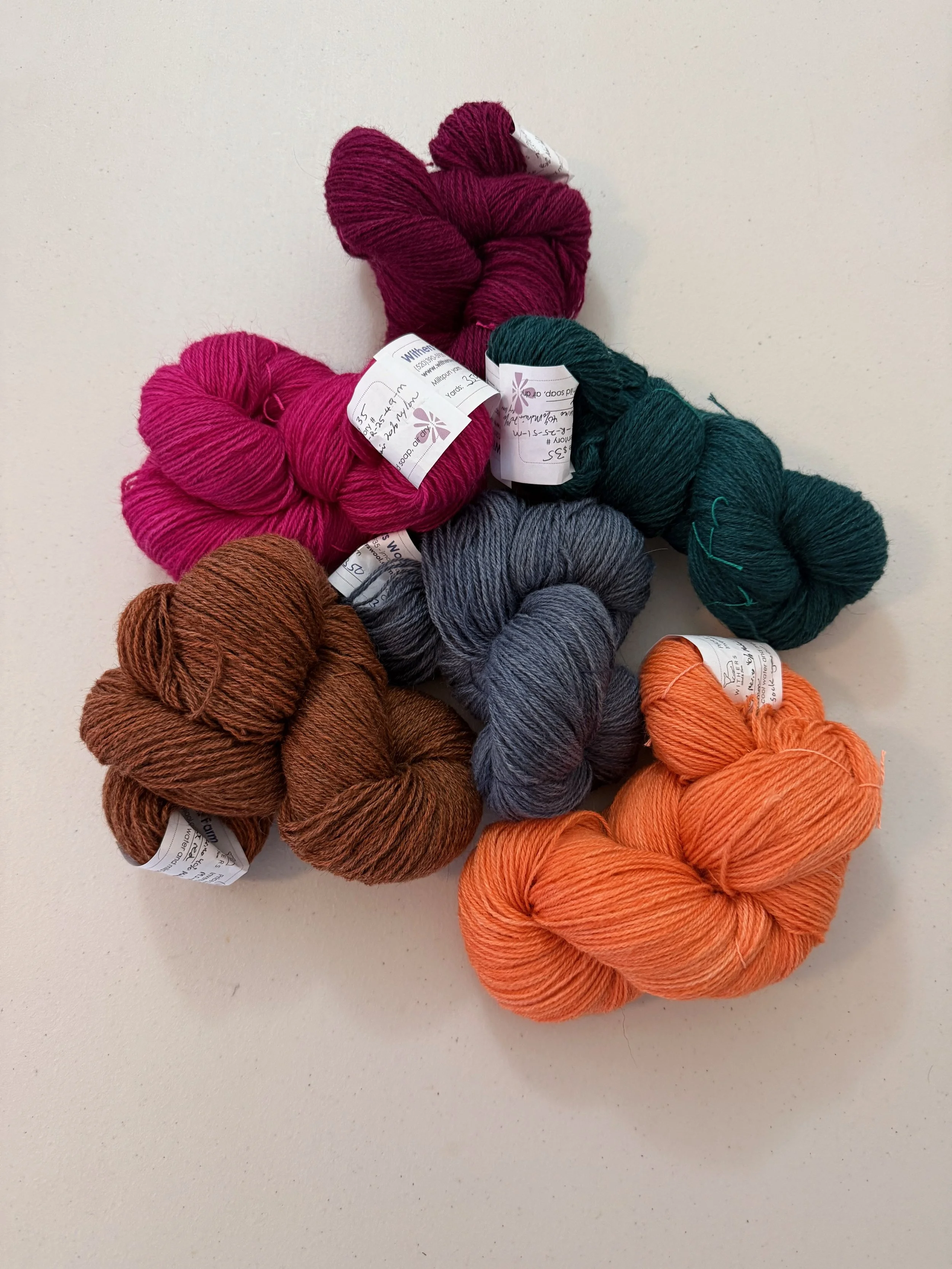
Some of the dyed sock yarns
Events
December was a busy month at the shop with lots of visitors. Several people took advantage of the offer to make their own Christmas ornaments - most people needle felted an ornament; a few stuffed a globe (with roving, ribbon, beads and glitter).
Our biggest event was appearing on three live shots on Fox45 News on 22 December at 7:24, 8:24 and 9:24. The way this came about was the Maryland Farmer Association featured Withers Wool and Farm in a blog dated 7 December on their website: https://mymdfarmers.com/fiber-art-gifts-bring-the-joy-of-the-season/ It received a good reception and Fox45 News saw it and decided to feature Withers Wool and Farm on 22 December in the what they call their Hometown Hotspot. (I did a social media post on this on 23 December.) In the first segment, I was featured feeding and talking about the Angora goats; in the second segment, Danielle Bauer from the Maryland Soybean Board talked in general about Withers Wool and the importance of buying local; and in the third segment, Ruth (one of the fiber artists who help at Withers Wool) was featured spinning a yarn and discussing the process of creating yarn and fiber products. What a great event and a number of people have already showed up at the shop noting they had seen the segments on TV. You can go to the following web address to see the videos: https://foxbaltimore.com/fox45-mornings/hometown-hotspot/hometown-hotspot-withers-wool
I trust everyone had a Merry Christmas and will have a Happy New Year. I will be closed New Year’s Eve Day and New Year’s Day. And then open Friday 2 Jan, Saturday 3 Jan and subsequently Wed-Sat 10-4 as normal.
Finally, thanks to everyone who stopped by in 2025 to visit either the farm/shop or the booth at one of the shows we attend. Truly, my greatest joy is interacting with all you talented fiber artists.