
Recovering from the Maryland Sheep and Wool Festival (MDSW)
I was a vendor at the recent Maryland Sheep and Wool Festival, which took place 2-3 May at the Howard County fairgrounds in Maryland. It was a great show with lots of business, and I enjoyed meeting old friends as well as many new people. In 2025 in the mid-month email/blog in May, I discussed preparing for the show. This year, 2026, in the mid-month May email/blog, I will discuss the aftermath and post-show actions. To give a framework for this discussion, I will discuss my post show actions within four categories: direct recovery; analysis; catch-up; and future planning.
Direct recovery involves packing up all the material/inventory at the show, taking it back to the place of business (for me Withers Wool and Farm, which is thankfully only 15 minutes away), unloading, and then setting back up in my shop. Since the shop is open Wednesday thru Saturday, this gives me two days to unpack and put everything back in order. I unloaded my van Monday morning (takes about a half hour hour) and then took a few hours Monday afternoon to put all the inventory I took to the show (e.g. handspun yarn, mill spun yarn, and a few finished goods) back where it belonged as well as restacking the wire racks and other materials I use in the booth at the show. Tuesday, I took another hour or two to tidy up, made sure everything was looking neat and orderly and prepared for the shop opening back up on Wednesday.
Next comes analysis. Since the inventory system I use is not (now) integrated or automated, this takes some time. Prior to 2023, items (e.g. handspun yarns) made, did get tagged and had a unique number - but this number was not entered into any system. Since 2023, each item made receives a unique number (which is correlated with the type of item it is, when it was made, and some salient characteristics of the item). However, the system used - essentially manual spreadsheets - was not set up to then track what was sold. I am in the middle of upgrading the system to integrate existing inventory, new inventory added, and what has sold to give a complete and accurate description of what occurs during an event and/or timeframe- e.g. what precisely was sold at MDSW 2026. For now, I manually go through the various sales slips, enter each into a spreadsheet of items sold and then tally up the various categories. This all takes time. The good news is that lots of items sold at MDSW 2026 - and thank you to all the folks who stopped by to either purchase something and/or talk to me. The “bad” news, well not really “bad”, so let’s just say the other news is that it took me approximately 5-6 hours to input all the information about items sold and tally it up. Now, what to do with this info? Ah, that is for the Future Planning activity.
But next is catch-up. BTW, these activities are not all sequential. Catch-up proceeds somewhat concurrently with direct recovery and analysis. Catch-up involves, as you might guess, literally catching up on activities that were not done during preparation for the show, during the show, and right after the show. The biggest part of catch-up involves the farm animals, principally the Angora goats and Merino sheep. For example, my normal practice is to clean the animal pens every day. That is not possible during the show. Early May the vegetation, to include the pastures, are growing rapidly. To maintain pasture and animal health, I need to rotate the sheep and goats onto various fields and cut the pasture on the field they were on - so this needs to be attended to. There are various personal things to catch up on, e.g. emails. And one more activity I will include in catch-up: Maryland state taxes are collected on sales at the show and these need to be processed, added up, and properly submitted to the state of Maryland.
I am not sure if future planning is the best descriptor of the last category. Basically this involves taking the information gathered in the analysis activity and then acting on it in two ways. The first action is mostly a short-term focus: ascertaining what was sold that now needs to be replaced ASAP. For example, I took 15 cat mats to the show (all that I had) and all sold. So, to have cat mats for the shop, then (relatively quickly) more cat mats need to be made. Another example: 13 single ply yarns were sold, of which 7 were > than 100 yards in length. With the assumption that one generally wants to replace inventory, then an equivalent number of these single ply yarns need to be made. But this takes some time, so part of the planning process is to think through what yarns (and other inventory) needs to be made in what order. The second action is to examine the analysis from the show, along with additional analysis (e.g. sales from the shop and perhaps other shows) to determine if trends can be ascertained. For example, a trend (over the last 8 months) is that the number of single ply yarns that have sold has increased as compared to previous timeframes. Another trend is that the number of cat mats sold continues to increase. So, these trends can help determine what is made for the shop - both the priority and number.
That’s pretty much it. I hope this provides some insight into the post show actions and things I think through. If you have any suggestions and/or observations, please do let me know. And thanks again for everyone who engages with Withers Wool and Farm - either at a show or at the shop on the farm.
PS A few pictures of the booth set up at MDSW follow.
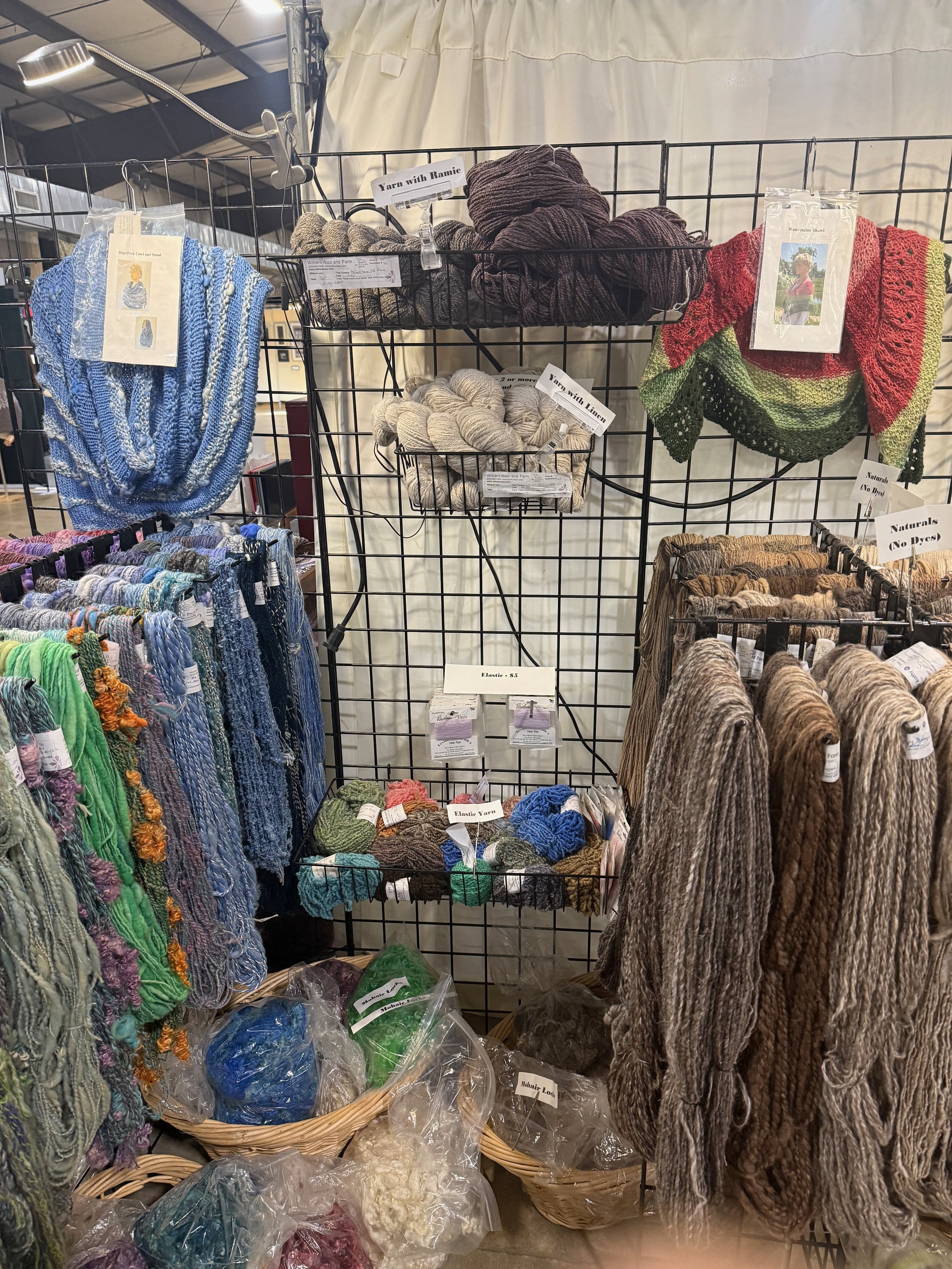
MDSW Booth Set-up
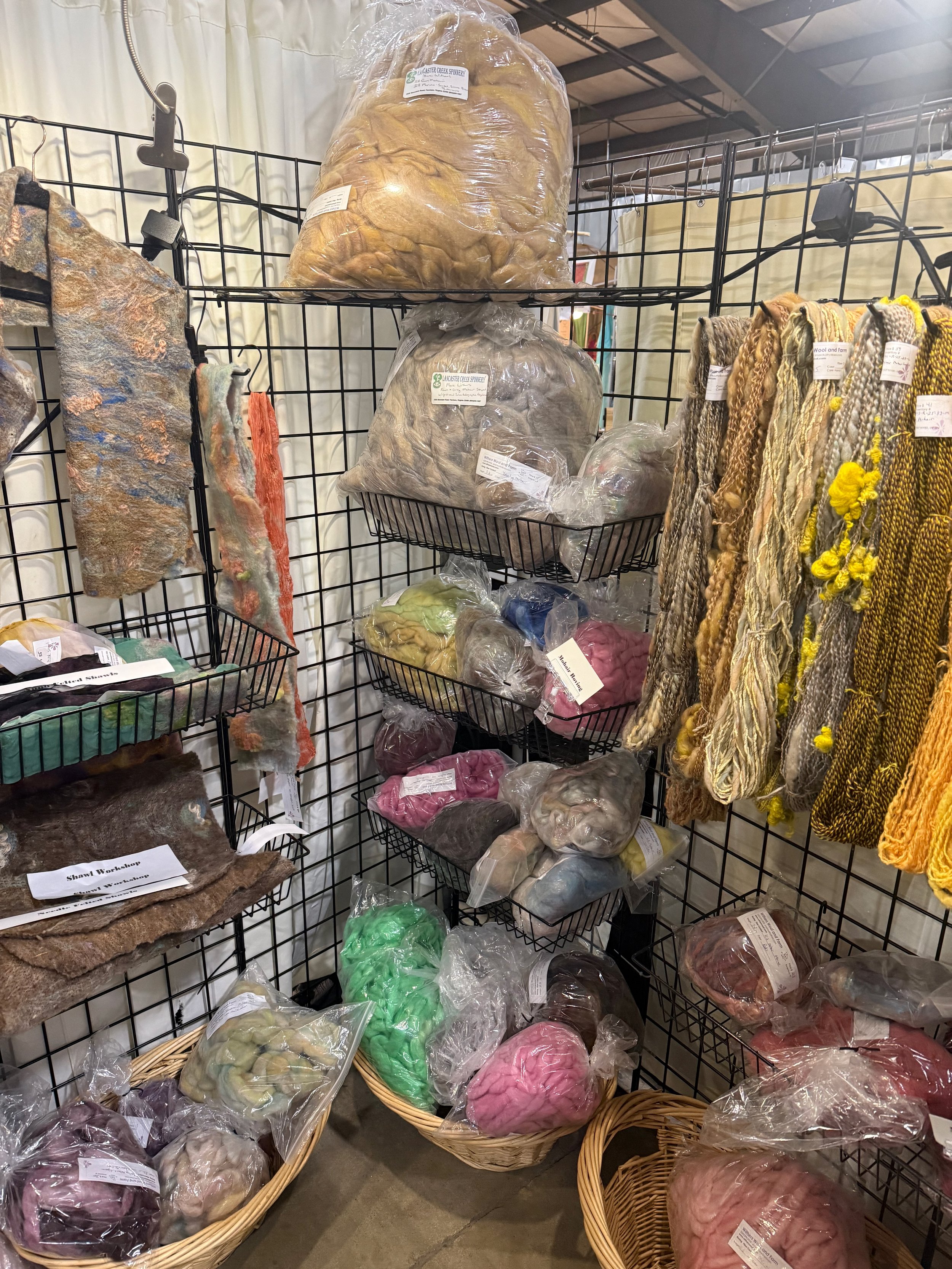
MDSW Booth Set-up
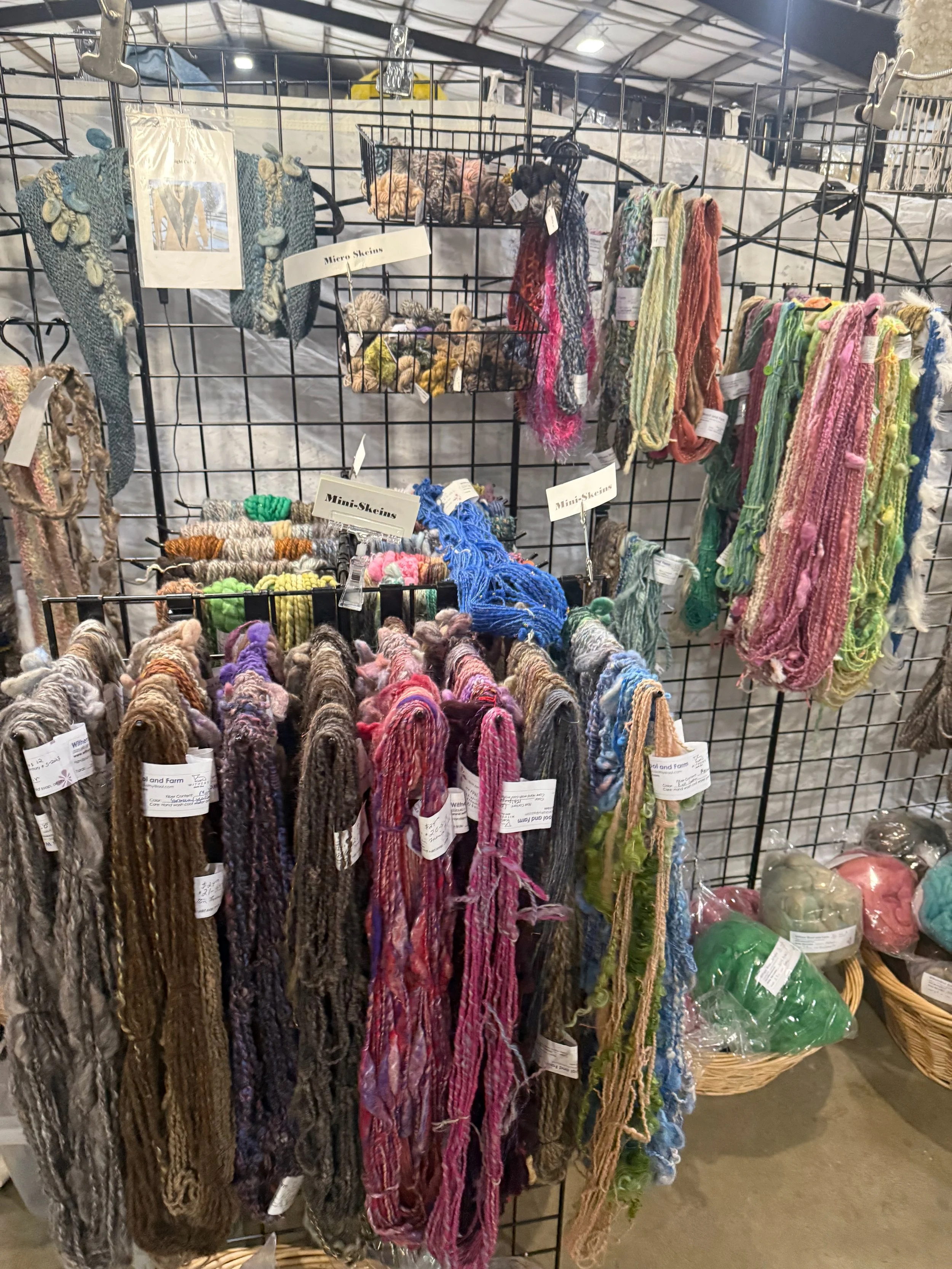
MDSW Booth Set-up
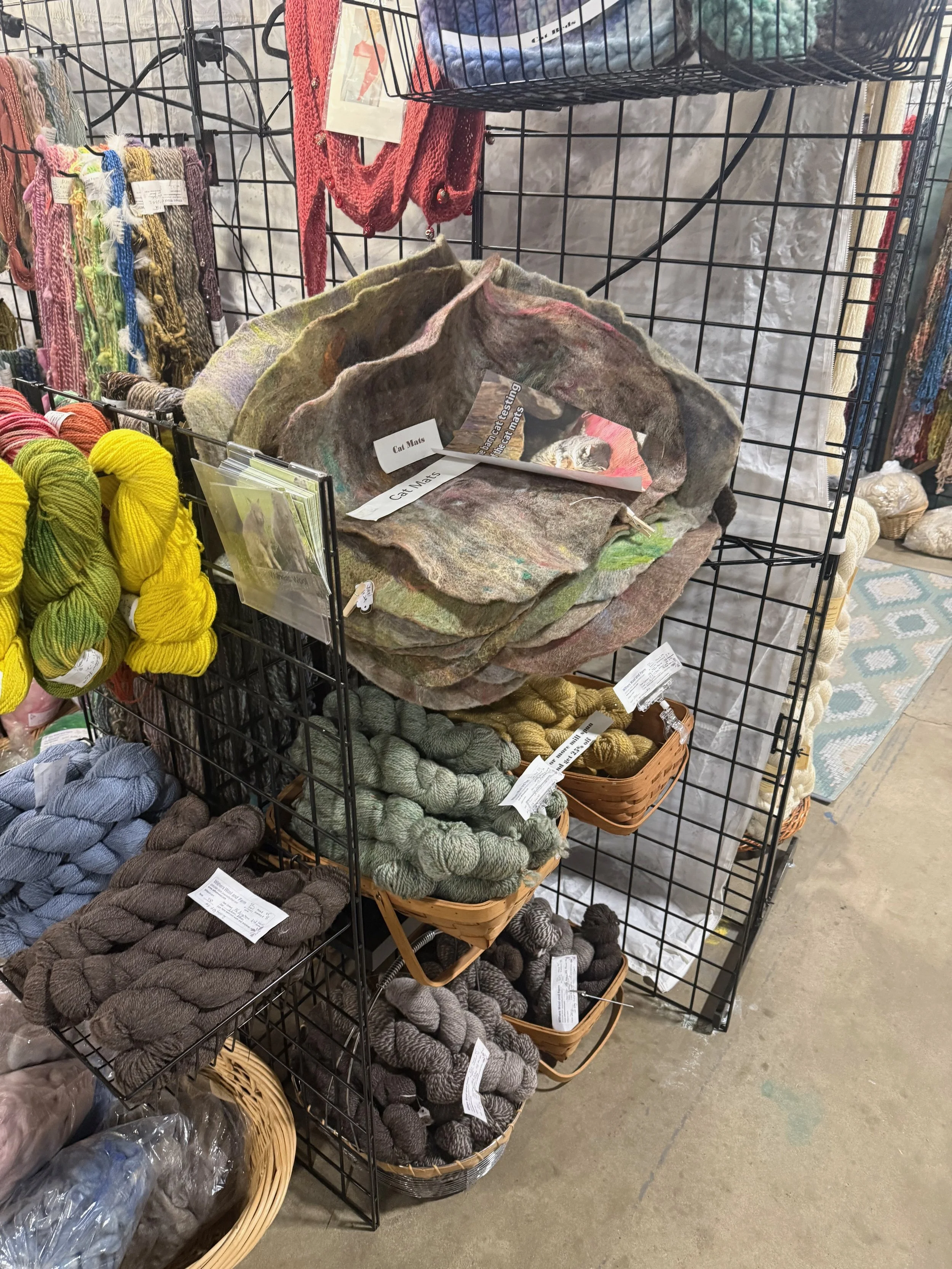
MDSW Booth Set-up