
Baby Angora Goats
The biggest event this April at Withers Wool and Farm has been the birth of two baby Angora Goats. And so I will discuss the sequence of actions that led to their birth and their first two weeks.
The first thing to think through is when you want the baby goats to be born. I determined a good window was from approximately mid-March to mid-April; at that period we are generally past the real cold temperatures of winter, good grass will be available for when the babies start to graze, and for me, personally, there are no external events (meaning I can be at the farm or close to the farm at all times). The gestation period of an Angora Goat is 150 days plus or minus two days. (This is very similar to all other breeds of goats.) I decided to breed three does and I put them in with the buck on 10/21/25 and separated them from the buck on 11/23/25. And so my window for the does to give would be from 3/20/26 to 4/22/26.
A week before the birthing window, I separated the three does that had been bred from the rest of the herd so I could start giving them more grain and watch them with cameras I have set up. In the period leading up to that time, I checked them every two weeks for health and looking for signs that they might be pregnant. In that regard, here are some of the indicators one looks for, regarding goats being pregnant:
“Bagging Up": The udder fills with milk. Seasoned does may bag up months before, while first-timers may only bag up days before giving birth.
Abdomen Shape: The goat will develop a larger, lower, and often lopsided belly, appearing more pronounced on the right side where the rumen is smaller.
Changes in Appetite: Pregnant goats may eat more in early stages or have a reduced appetite later as the kids grow and press against the rumen.
Physical Changes: The vulva may appear slightly swollen, relaxed, or "looser," and the tailhead may appear more prominent as ligaments start to soften, particularly in late pregnancy.
Two of the does showed these signs and I was relatively sure they were pregnant. One did not show any of the signs and I was surmising she was not pregnant - but we have had does in the past that we did not think were pregnant and then out popped a baby.
Then, there are four classic indicators when a goat is about to give birth:
Sunken Tailhead: The ligaments around the tail completely relax.
Engorged Udder: The udder becomes very tight, shiny, and the teats feel full.
Restlessness/Nesting: The doe may lie down and get up, paw at the ground, or make loud, frequent noises.
Discharge: A clear, thick discharge may appear, hanging from the vulva.
For Angora goats, the engorged udder and the restlessness/nesting are usually the best indicators. But sometimes the goat is not showing any of these signs and all of a sudden goes into labor and gives birth.
I am often asked if one needs to help the doe give birth, i.e. help deliver the baby. The answer is fortunately not. Only once in the last six years have I had to help the doe have her baby. (Although occasionally I will help to gently guide the baby if the doe is straining excessively.) Once active labor starts, a goat typically delivers her baby within 30 minutes to two hours - and usually within an hour.
On the morning of 4 April, Plum, one of the obviously pregnant does, started to isolate herself from the others and had an engorged udder, so I figured she would soon give birth. I checked on her at 1230 and she had not obviously started labor. I checked on her again at 1:30 and found her licking a baby, which had probably been born about 1:25 or so. I checked to make sure there were no obstructions in the mouth (there were not) and then moved Plum and her baby to a 4x6 foot pen previously set up - which allows them to stay together to bond, gives enough room to move around but also allows me to relatively easily grab either the mom or baby as needed. I also loosely dried off the baby with a towel to help Plum out. In a half hour, the baby was on its feet and looking to drink. About half the time you need to help direct the baby to the mom’s teat to nurse. This baby only needed some gently nudging and by 2:30 was vigorously nursing. Hooray! The baby doe was large and weighed 108 oz. (An average kid doe will weigh ~ 90 oz at birth). Angora goats normally only have one or two babies, and so I watched her for a bit to see if she would have a second and she did not.
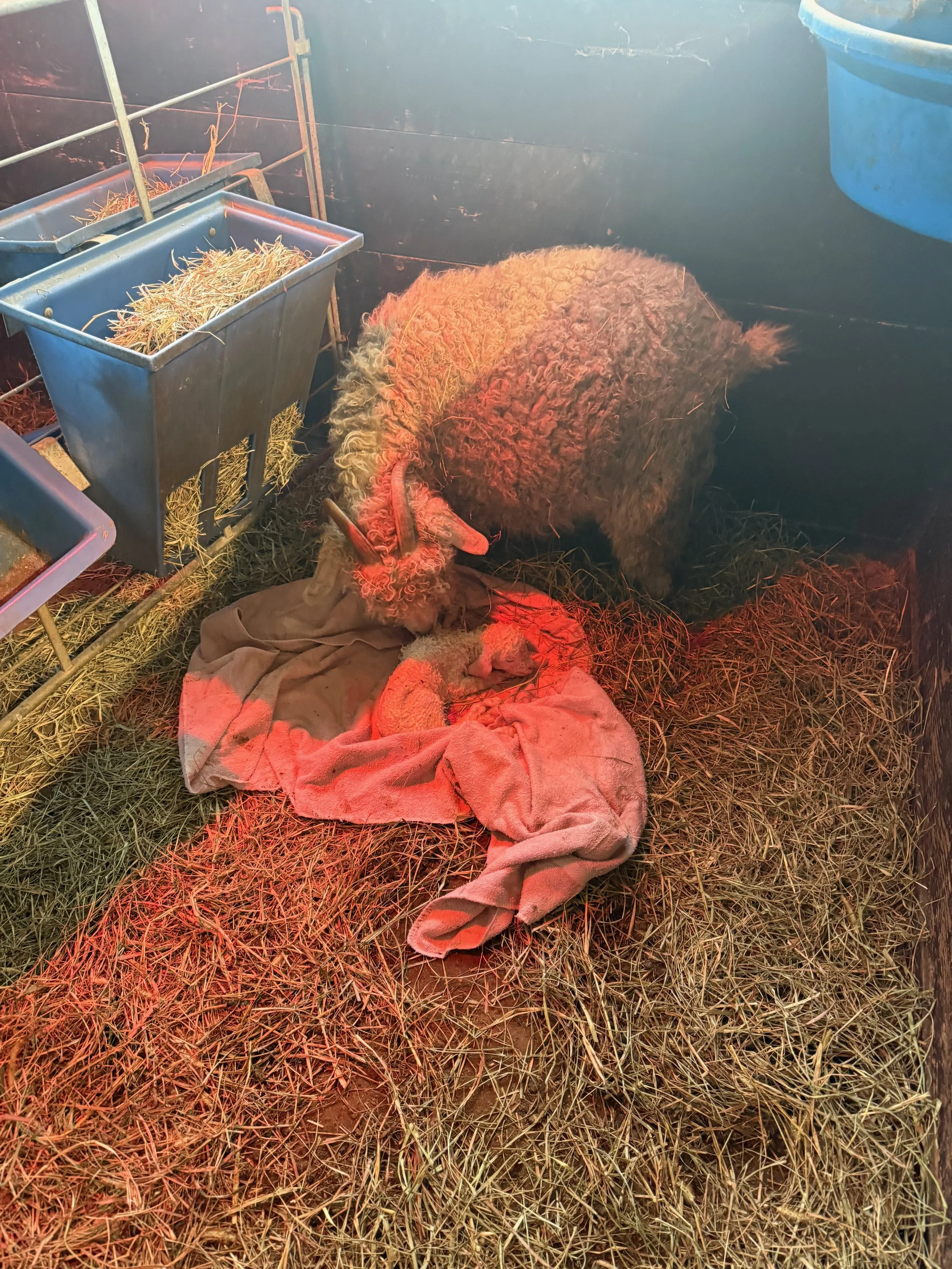
Mom and new-born Angora goat
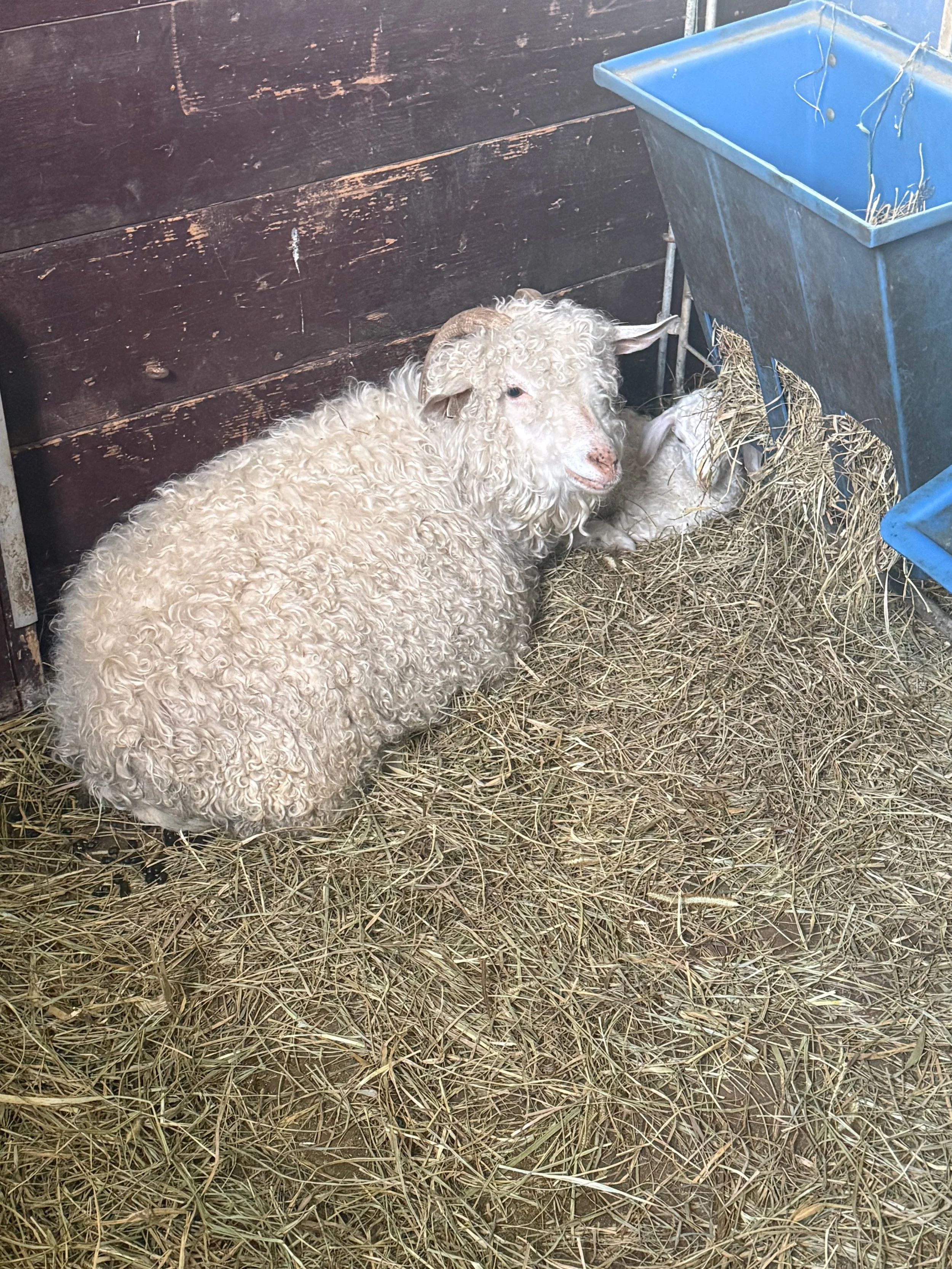
Mom and baby Angora goat resting
A second doe, Lily, had her baby on 7 April at 7 PM. Like with Plum, she was isolating herself and had engorged udders. I was able to watch her on the cameras and she went into labor about 6 PM. She was straining a bit and the baby was half out and then did not seem to be making much progress so I gently pulled on the baby as the mom pushed and the baby, a buck, eased out. This baby did not progress as easily. He was not vigorously sucking on the mom’s nipple so I decided to supplement him with milk from a bottle (a mix of powder milk fom goats and milk that had been frozen - and then thawed - from a dairy goat we had). I gave him an ounce the evening of the 7th and then 2 ounces the morning of the 8th. The baby buck weighed 92 oz at birth (a bit less than the average for a baby buck - but not bad.) He had gained a little weight by the morning of the 8th (weighing 95 oz.) Finally by 1 PM on the 8th, I saw him nursing vigorously and all was well.
Both babies are doing well and gaining weight as expected. I put them and their mothers together, along with the third goat, on 10 April. The 3 does butted heads for a few minutes and then settled down. On 15 April I started to let the babies and moms back out on the pasture for short periods and by 19 April out for several hours. They now enjoy romping in the fields and playing with each other.
The third doe, Strawberry, did not have a baby. However I will keep her with the two moms and their babies as an “Auntie”. She is getting along well with the the two kid goats. Keeping a non-pregnant goat (such as a wether, young doe, or older doe) with nursing mothers and newborns is beneficial for herd social structure, reduced stress, and aiding in herd management. It prevents the social isolation of the non-pregnant goat, provides babysitting services to mothers, and supports social bonding.
I will keep the moms and babies isolated from the rest of the herd for at least two months. That will allow them and the babies to graze on the small fields around the barn, (which have been fallow for about 6 months - reducing the risk of parasites) and also allow me to give the moms the grain they need without having the other goats compete for it.
There are other things to do regarding the baby goats - e.g. tagging, giving certain shots, and continuing to weigh them to check for expected weight gain - but this discourse provides a good overview and the main considerations. I hope you enjoyed reading it and learning more about baby Angora goats.
PS All visitors to the farm are welcome to visit with and hold the baby goats.
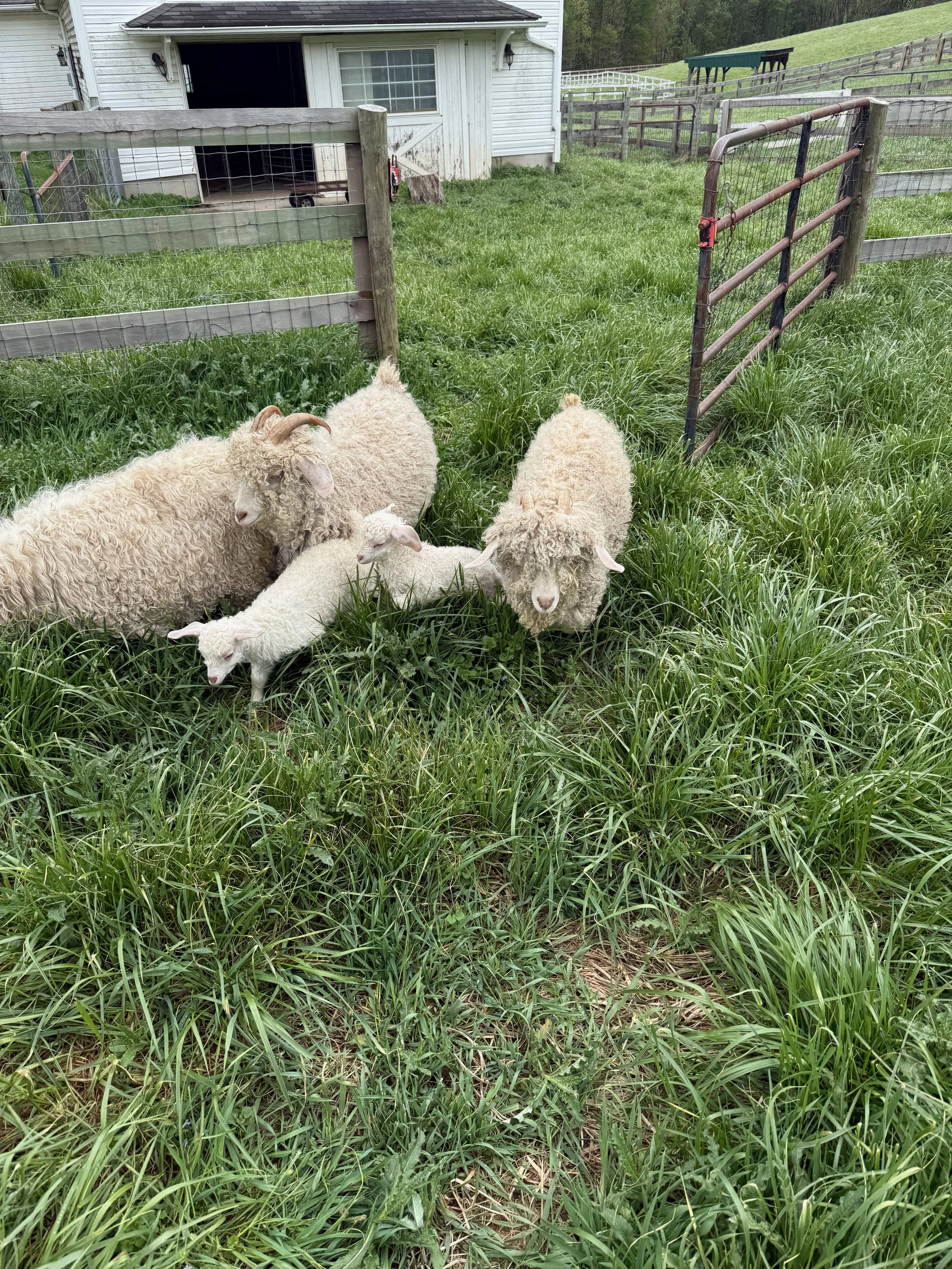
Out and about - enjoying the pasture